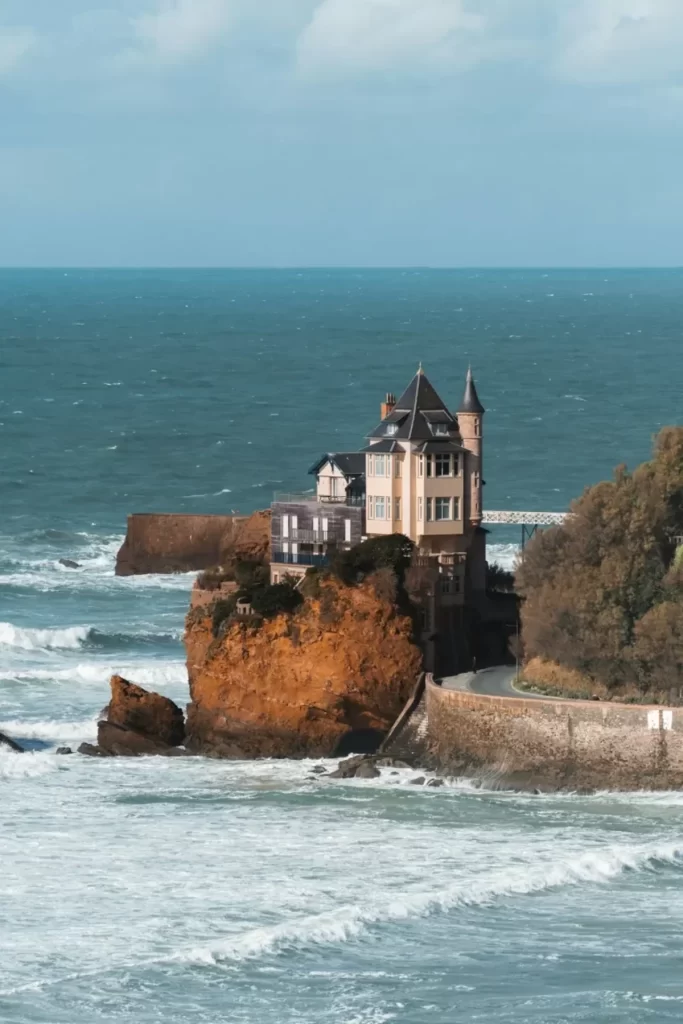
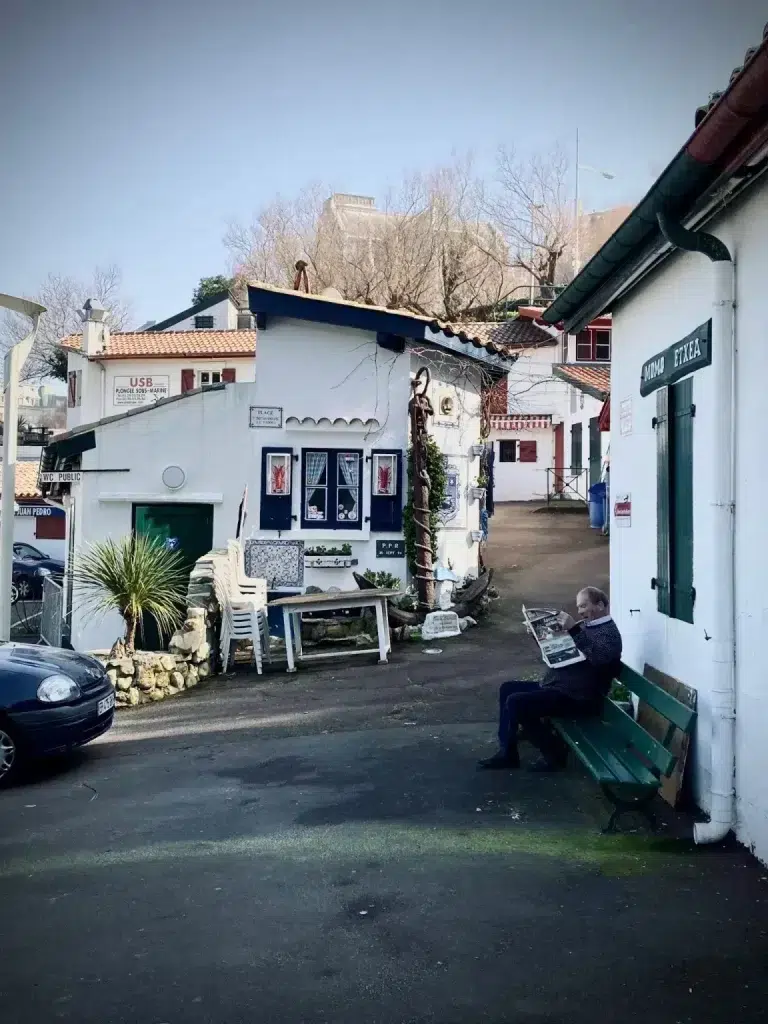
Biarritz History brief overview — drawn from our complete guide to Biarritz
Biarritz History in Brief: from Fishing Village to Surf Capital
In 1843, Victor Hugo visited Biarritz during a journey through the Basque Country. Captivated, he described the town as a “charming and magnificent place” — but immediately confessed his fear that it might “become fashionable.” He was right to worry. Less than ten years later, Empress Eugénie had settled on this Basque coastline and Biarritz history had changed forever. It is the story of a city that has never been content to stay as it was — reinventing itself at every turn.
Biarritz is a commune in the Pyrénées-Atlantiques department, bordering the Atlantic Ocean less than 25 kilometres from the Spanish frontier. Famous for its beaches, surf culture and Basque way of life, the city has a history far older than its reputation as a luxury seaside resort suggests.
Biarritz History: Medieval Origins and the First Sea Bathers
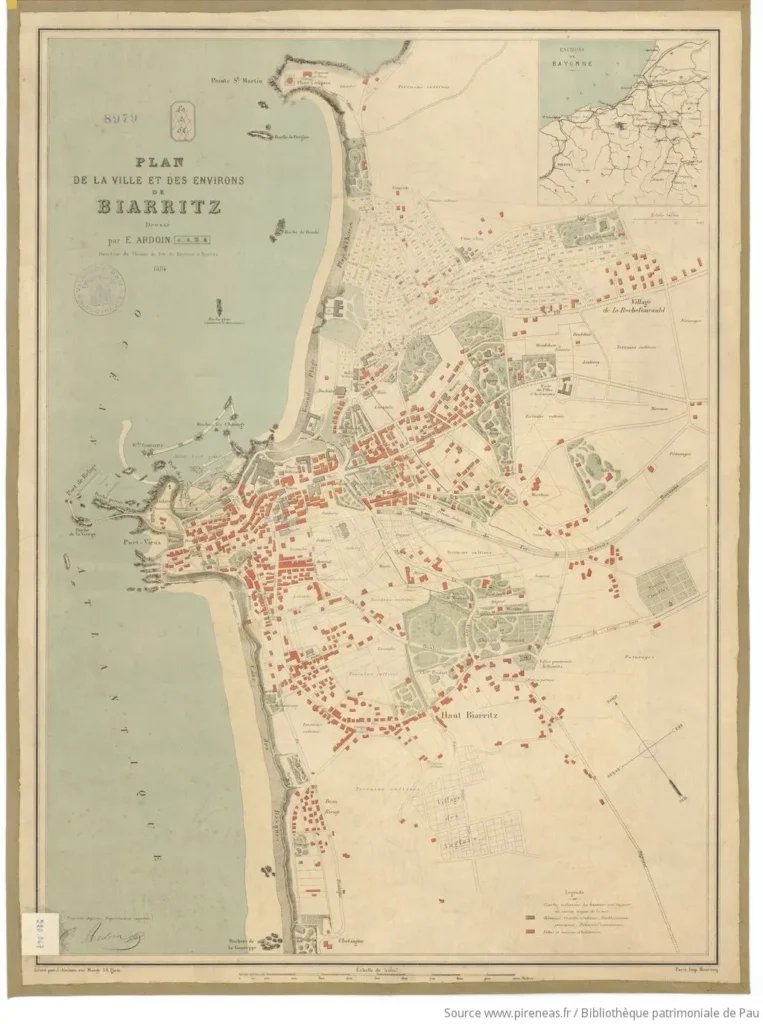
The name Biarritz first appears in written records in 1023, under the form Bayarrits. A Basque fishing village hugging the Atlantic, the town lived for centuries to the rhythm of the sea. From the 12th century, its sailors were hunting whales in the Bay of Biscay — expeditions lasting several months that built the reputation and prosperity of the town. The Fishermen’s Port was officially established in 1870.
But the transformation began long before Napoleon III. As early as 1765, the sub-delegate of Bayonne ordered roads to be built so that “persons of quality” could travel to take sea baths at Biarritz. In 1767, the magistrate Malesherbes wrote that “Biaris is recommended for sea bathing, indeed one could not take them more conveniently anywhere.” The therapeutic virtues of the ocean were already well known, and Biarritz was establishing itself as a health destination before becoming a pleasure one.
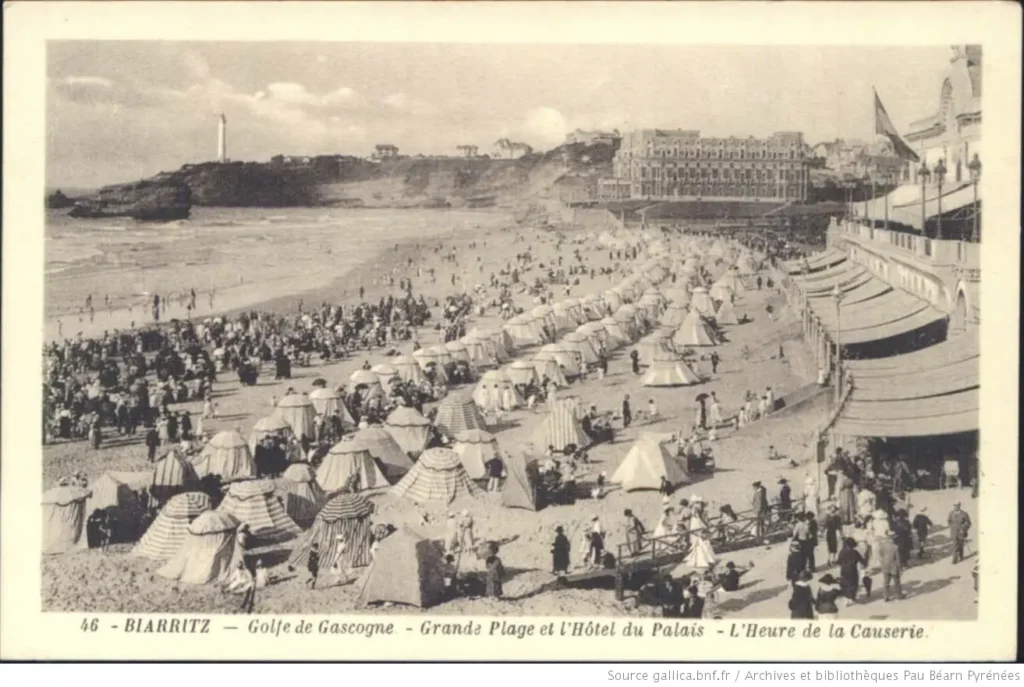
In 1832, the municipality began taxing tents set up on the Vieux-Port beach — a sign that visitor numbers had already become significant. Three years later, during the Spanish Civil War of 1835, a certain Countess Eugénie de Montijo took refuge on these beaches with her family. She would never forget this shoreline.
Biarritz History in the 19th Century: When Europe’s Royalty Gathered on the Basque Coast
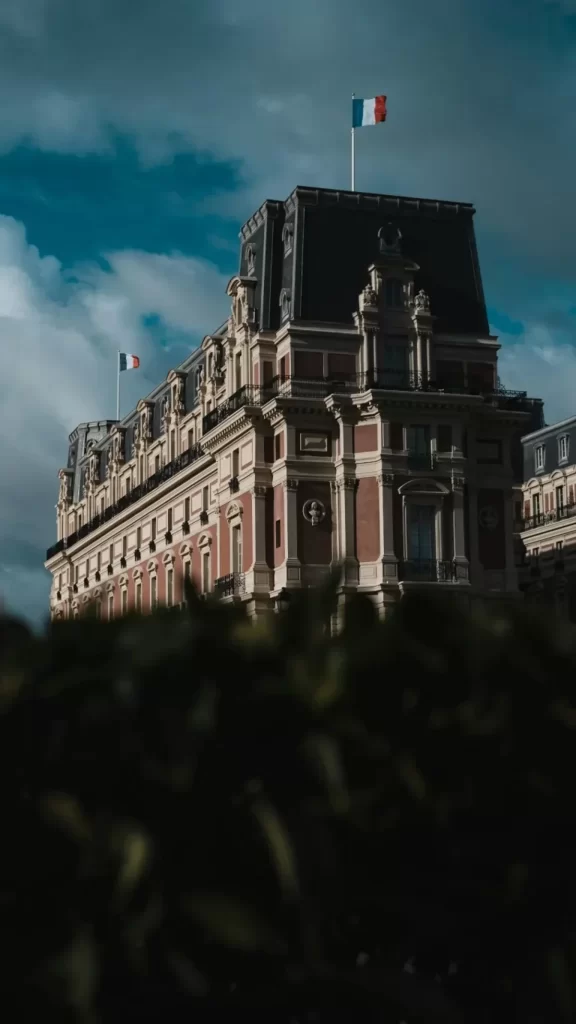
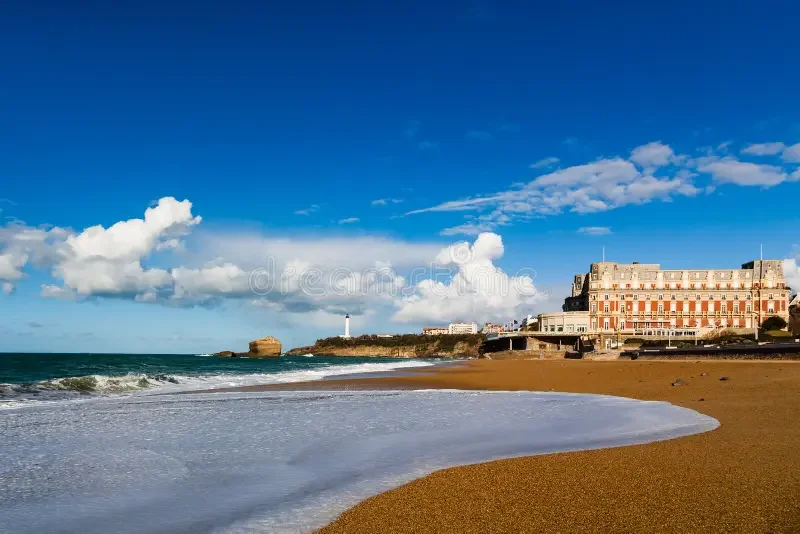
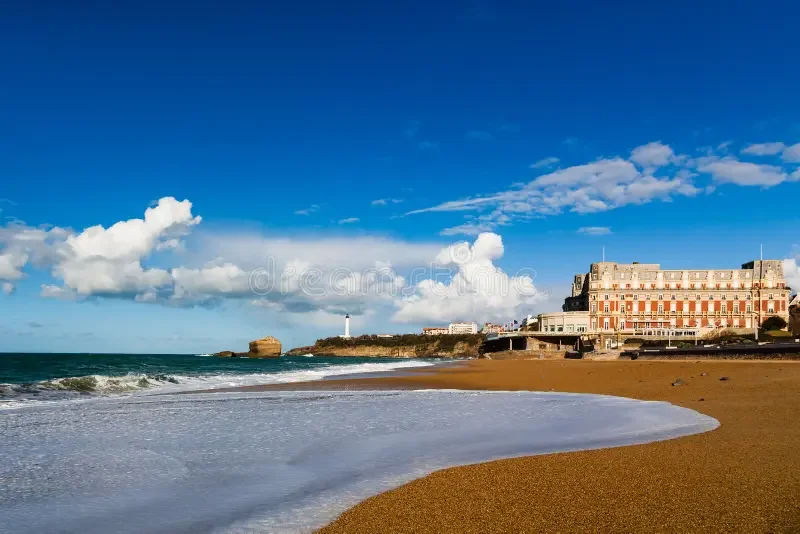
In 1854, Eugénie de Montijo — now Empress — persuaded Napoleon III to build a residence on the Basque coast. The Villa Eugénie rose from the ground in 1855, its red-brick facade dominating the sea. The imperial couple spent every summer there until 1868, surrounded by a court that turned Biarritz into the gathering point of the European elite.
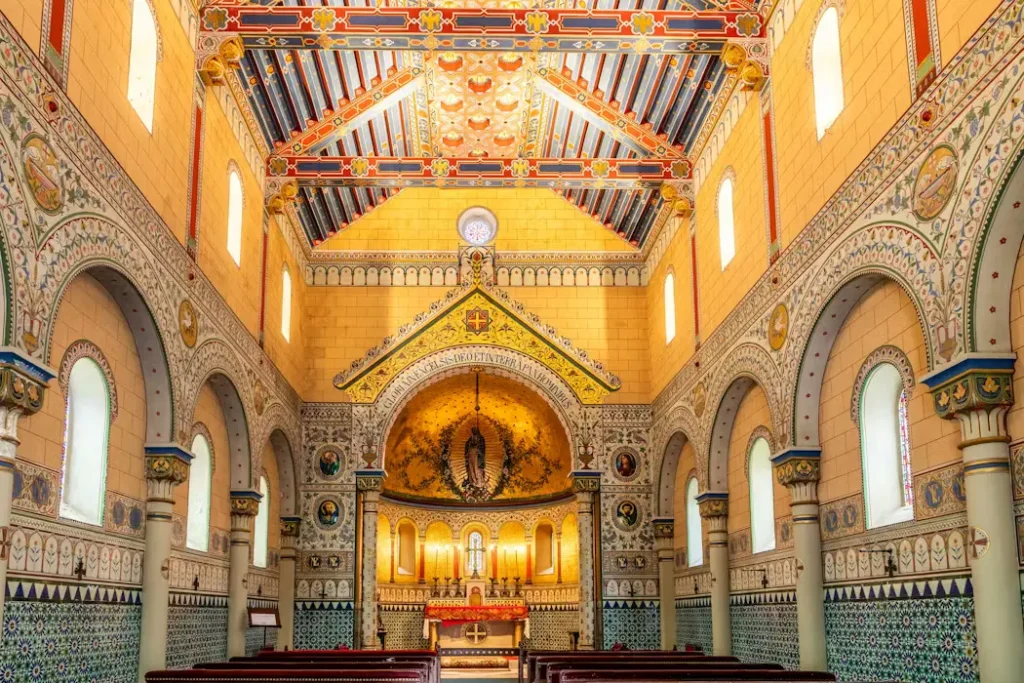
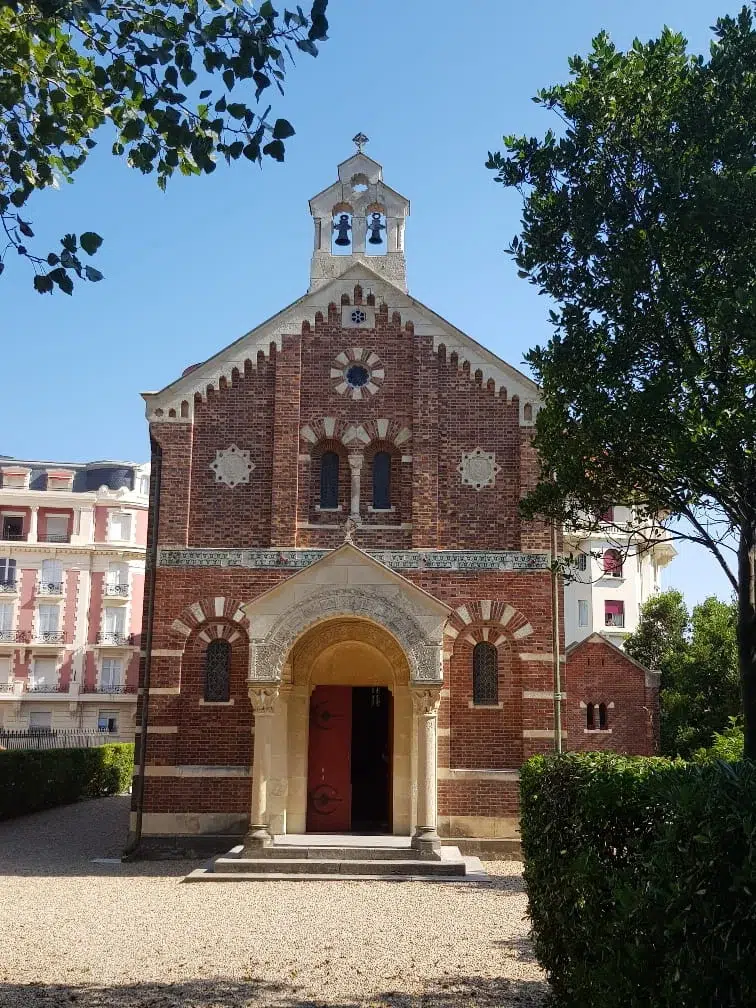
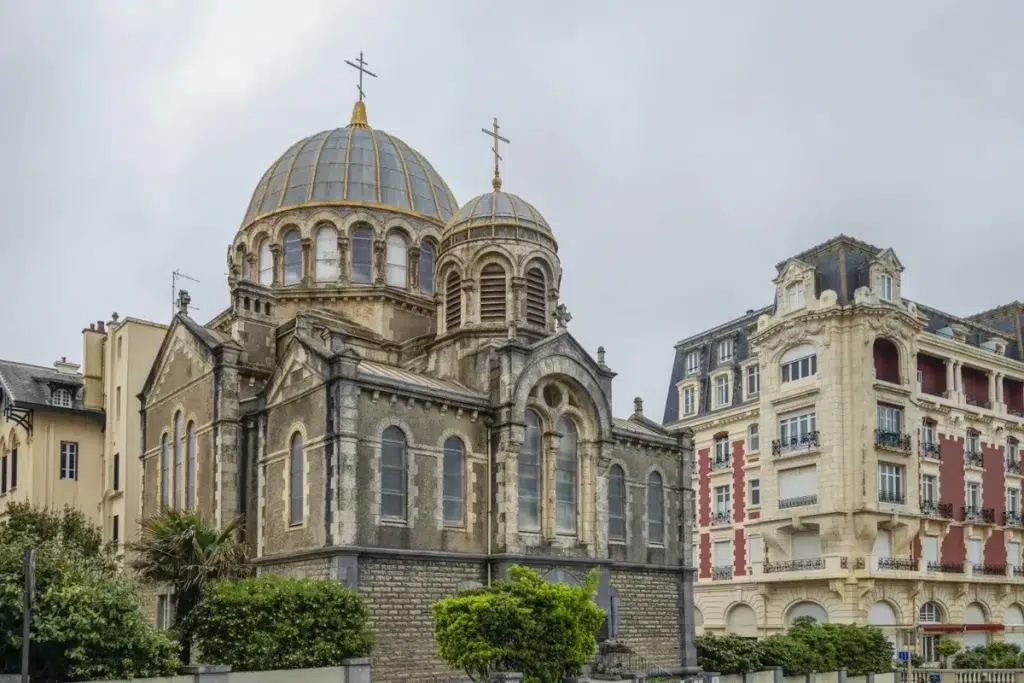
Crowned heads flocked to the town. Queen Victoria, King Edward VII of England, Bismarck — who made five visits from 1862 — turned Biarritz into a place of diplomacy as much as leisure. The Russian community settled in large numbers: by the end of the 19th century, a quarter of the town’s inhabitants were said to be of Russian origin. The Russian Orthodox Church, inaugurated in 1892, still stands today as a testimony to that era.
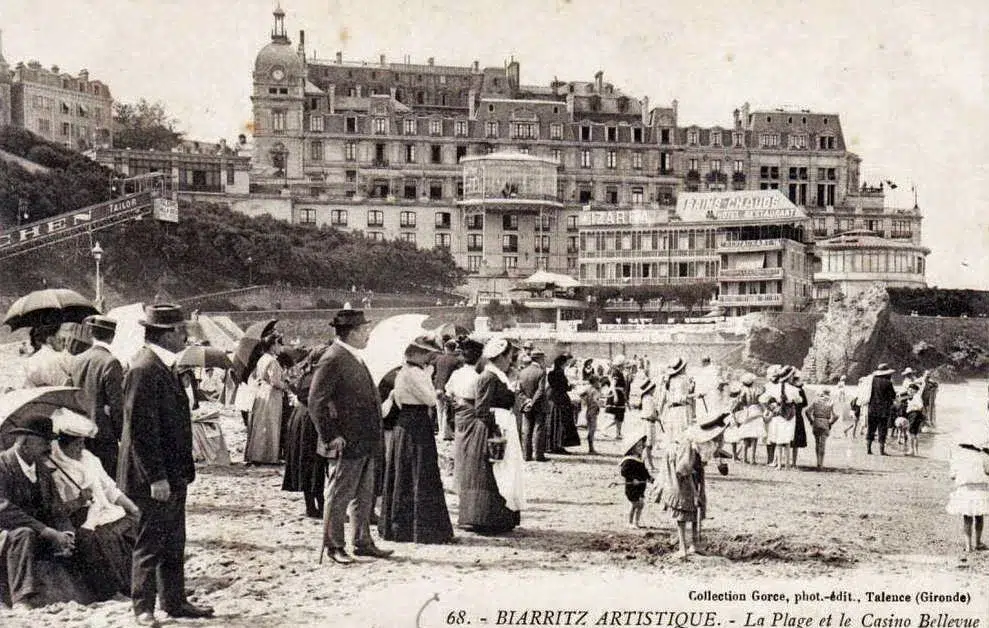
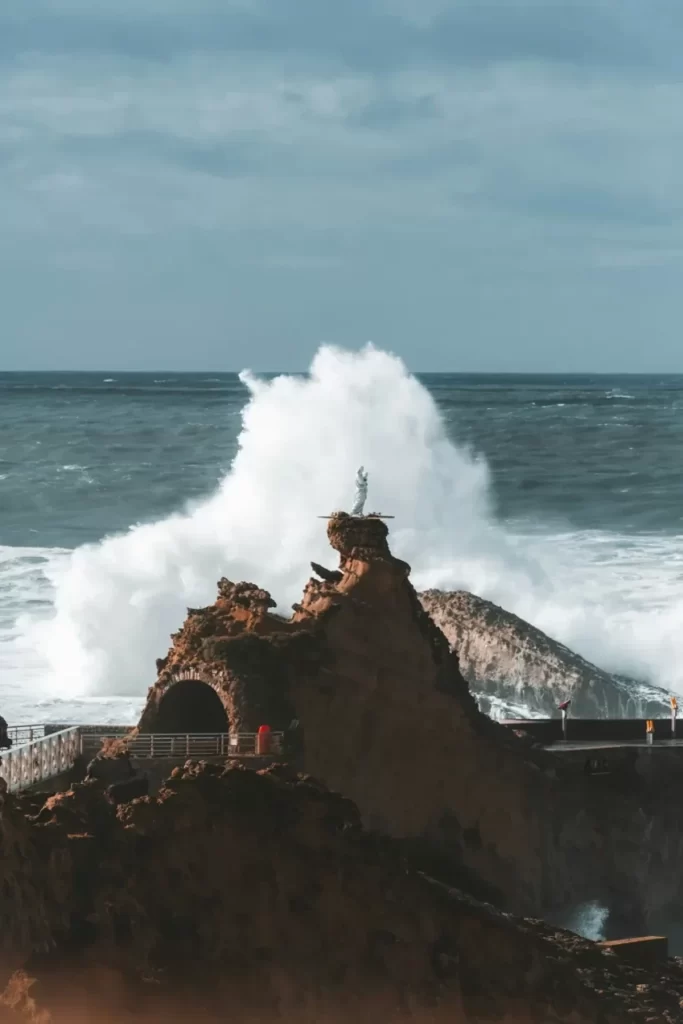
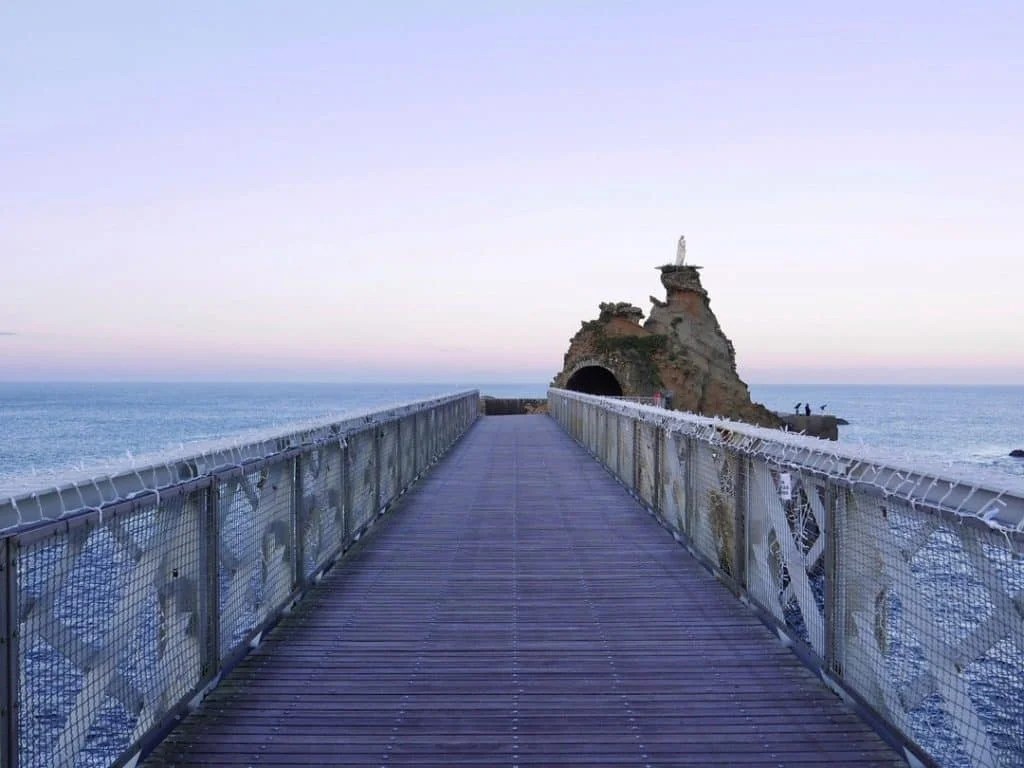
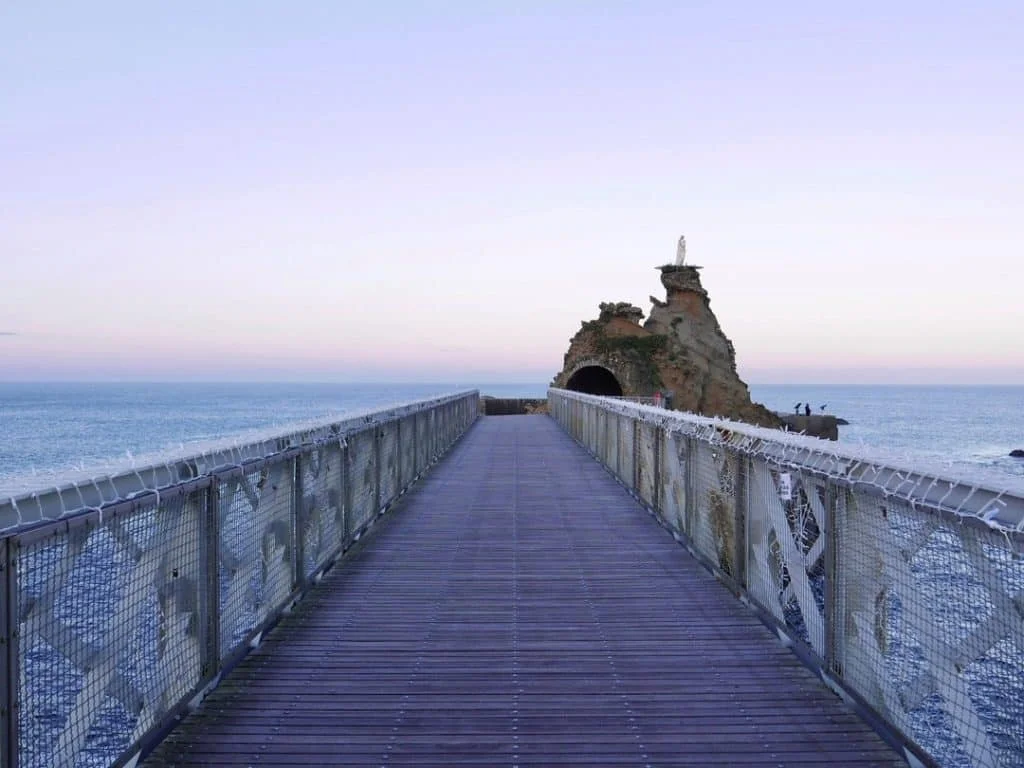
The town equipped itself to match its ambitions. The Casino Bellevue opened in 1857. The Napoleon Baths, in Moorish style, were built in 1858 with 166 cabins for bathers. In 1870, a tramway connected Biarritz to Anglet and Bayonne. In 1881, a footbridge from the Eiffel workshops linked the shore to the Rocher de la Vierge. By the late 19th century, the town was already welcoming 40,000 visitors a year. In 1915, Gabrielle Chanel opened her first couture house on avenue Edouard VII — Biarritz had entered the age of modern luxury.
Biarritz in the 20th Century: the Roaring Twenties, the War and the Birth of Surfing
The Belle Époque and the Roaring Twenties confirmed Biarritz’s status as the international elite’s favourite retreat. Charlie Chaplin, Pablo Picasso and Winston Churchill were among those who stayed. Frank Sinatra and American celebrities of the 1950s would follow. The town welcomed the world — and the world knew it.
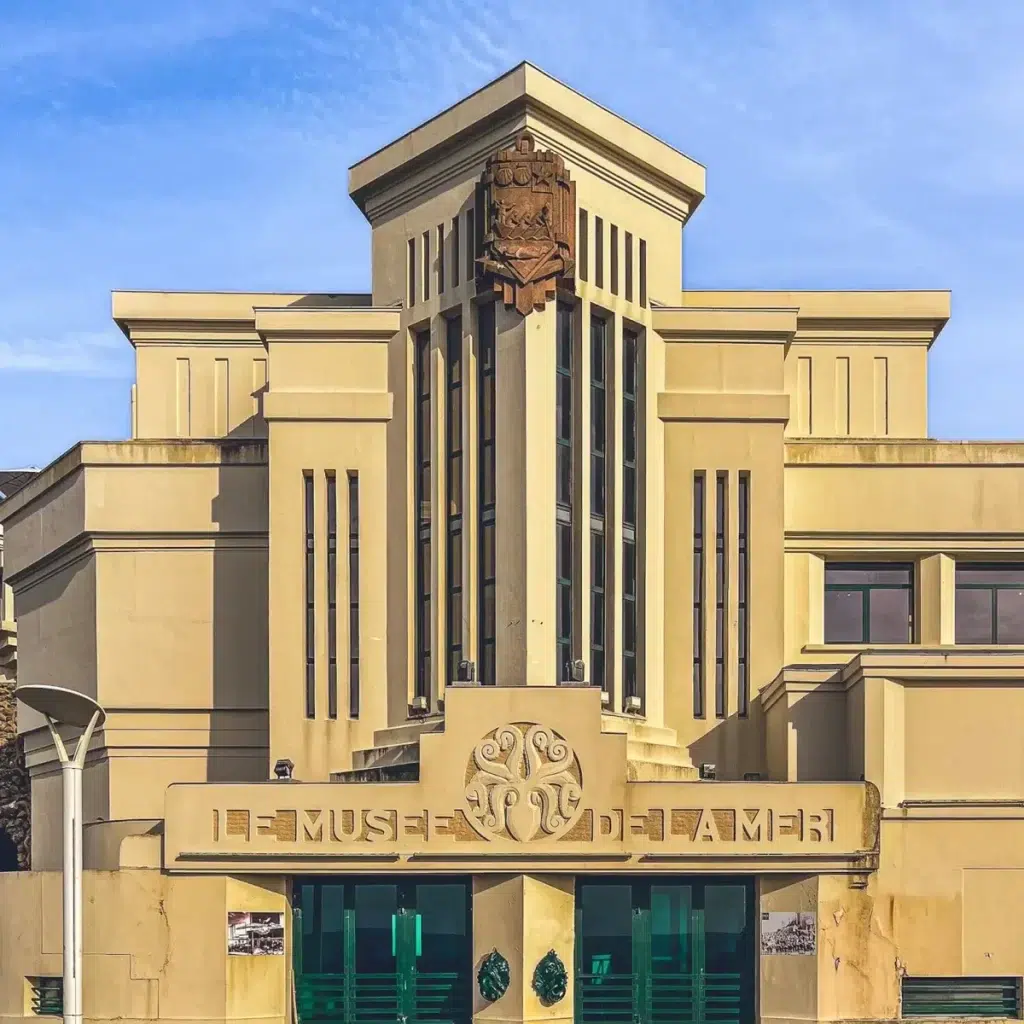
The 1929 crash dealt a heavy blow to luxury tourism. Then the Second World War left lasting marks on the city: the Germans built the Atlantic Wall along the coast in an attempt to repel Allied landings. Liberation brought renewal — families returned in their thousands to enjoy paid holidays and the country’s post-war reconstruction. The Musée de la Mer, opened in 1933, and Les Halles de Biarritz, built in 1885, remain unmissable landmarks of the city today.
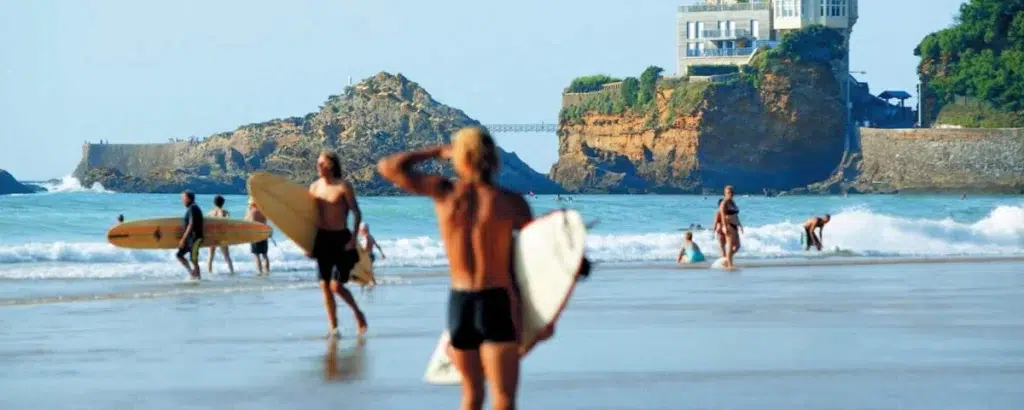
The true revolution, however, arrived in 1956. American screenwriter Peter Viertel came to Biarritz for a film shoot. Captivated by the waves of the Côte des Basques, he had a surfboard shipped over from the United States — the first ever seen in Europe. He left it behind. Young Biarrots seized it, copied it, and a culture was born. Biarritz became the surf capital of Europe, a title it proudly holds to this day.
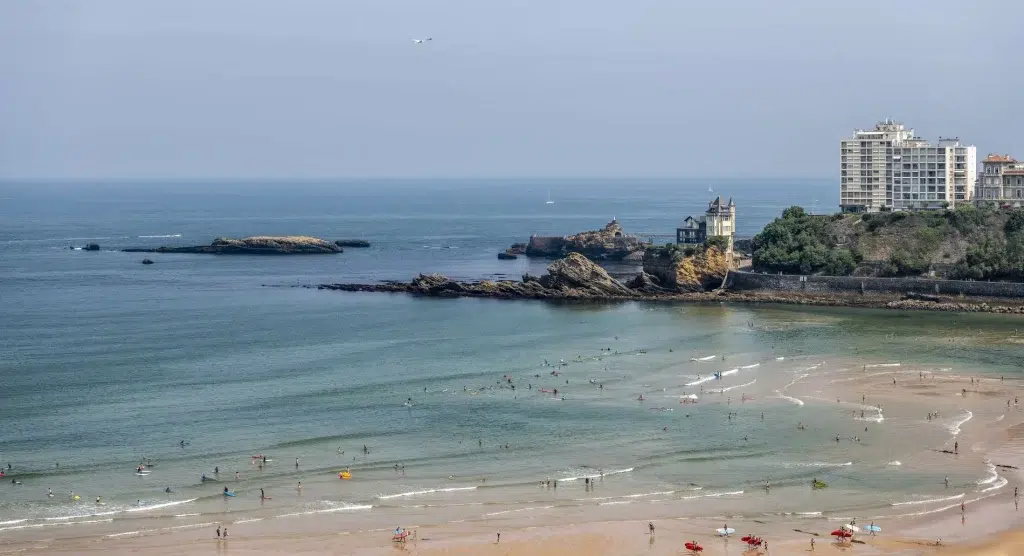
Discovering Biarritz Today: Getting Around a City Steeped in History
Biarritz today remains a city apart — neither a large metropolis nor a simple seaside resort. Its 25,000 permanent residents live between the Belle Époque architecture of the Hôtel du Palais, the surf breaks of the Côte des Basques and the flavours of the Halles. A city of contrasts since always, it draws hundreds of thousands of visitors each year from around the world, all drawn by this unique history.
For visitors, the Biarritz Tourism Office offers resources and themed guided walks that take you through the different layers of Biarritz history — from the Villa Eugénie to the surf breaks of the Côte des Basques.
To move comfortably between the town’s historic sites spread across 4 kilometres of coastline, hiring a private chauffeur in Biarritz is the most comfortable option — and the most in keeping with the spirit of a town that has always known how to receive its guests with elegance. A local driver is also a way to hear the stories that no guidebook ever tells.
Looking to travel beyond Biarritz and explore the Spanish Basque Country, the Landes or the Pyrenees? A Biarritz private transfer will take you to San Sebastián, Bilbao, Hossegor or Saint-Jean-Pied-de-Port in comfort — just as the wealthy travellers of past centuries chose Biarritz for its freedom and refinement.
Frequently Asked Questions about Biarritz History
What is the origin of the name Biarritz?
The name Biarritz first appears in written records in 1023, under the form Bayarrits. It was then a small Basque fishing village, formerly a parish of Bayonne, whose life revolved entirely around the sea and whale hunting.
When did Empress Eugénie have her villa built in Biarritz?
Empress Eugénie, wife of Napoleon III, had the Villa Eugénie built in 1855. Later renamed the Hôtel du Palais, it is today one of Biarritz’s most iconic landmarks and a symbol of its imperial splendour.
Who introduced surfing to Biarritz?
Surfing was introduced to Biarritz in 1956 by American screenwriter Peter Viertel, who had a surfboard shipped from the United States — the first ever seen in Europe — during a film shoot on the Côte des Basques. He left it behind, and a surf culture was born.
When did Coco Chanel open her couture house in Biarritz?
Gabrielle Chanel opened her first couture house in Biarritz in 1915, at 2 avenue Edouard VII. Drawn by the social scene and the wealthy clientele fleeing the war, she cemented Biarritz’s image as Europe’s ultimate luxury destination.
More about Biarritz
what to do in biarritz when it rains
Wondering what to do in Biarritz in the rain? The question deserves a proper answer,…
biarritz beaches
The Biarritz beaches are at the heart of the city’s identity — and they are…
When to Visit Biarritz
Wondering when to visit Biarritz? It is often the first question before planning a trip…

where to eat in Biarritz
Wondering where to eat in Biarritz? The question arises naturally — the city is full…
Biarritz weekend
A Biarritz weekend is the ideal escape to break from the daily routine for forty-eight…
Biarritz with Kids
Planning a trip to Biarritz with kids? Few destinations on the Atlantic coast offer this…