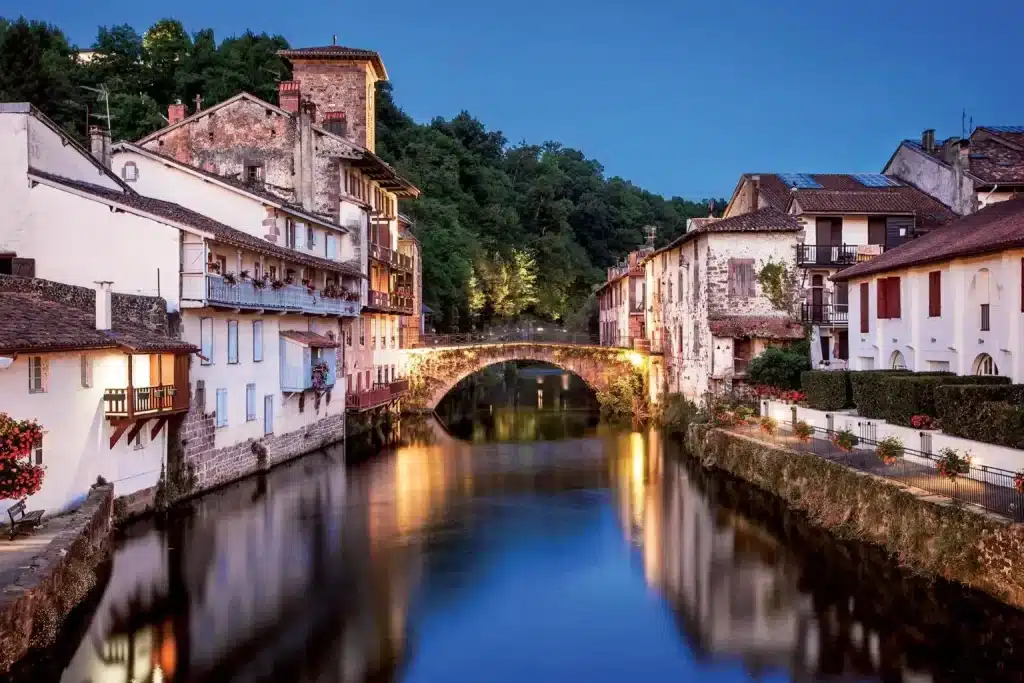
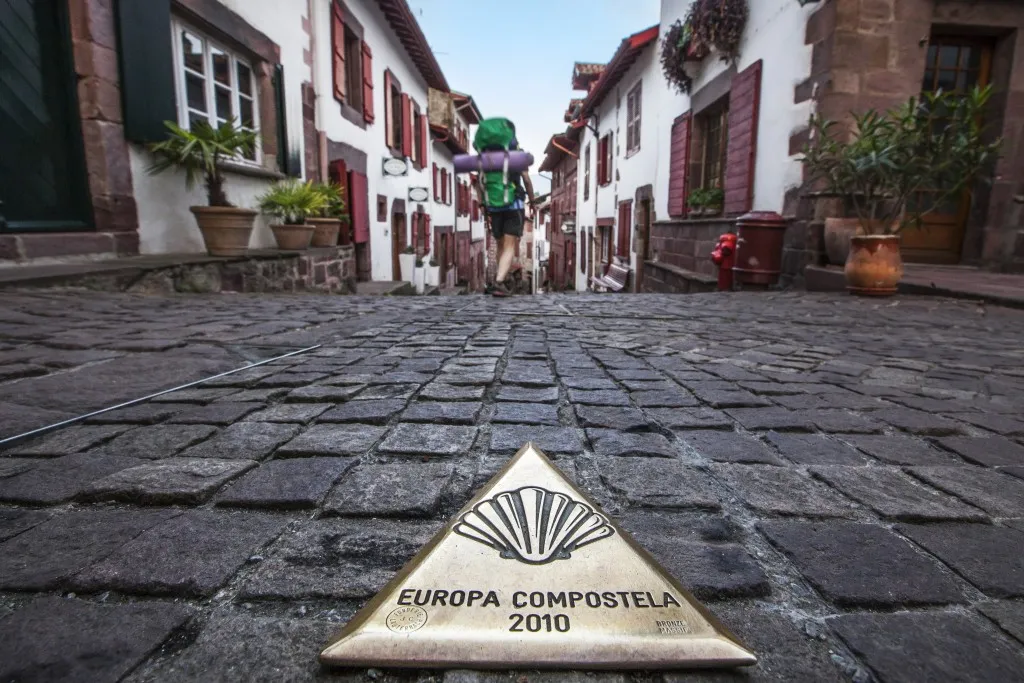
The Camino de Santiago traditionally departs from Saint-Jean-Pied-de-Port : the Way of Saint James — is one of the great pilgrimages of Christianity and one of the most iconic long-distance walks in the world.
Camino de Santiago: Complete Guide to the Pilgrimage
Every year, hundreds of thousands of walkers of all nationalities and beliefs follow these ancient routes towards the cathedral of Santiago de Compostela in Galicia, north-western Spain. Believers seeking spiritual renewal, hikers drawn by the physical challenge, travellers in need of perspective — the Camino welcomes everyone without distinction.
This complete guide covers the history of the Camino, its main routes, how to prepare, the credential and how to reach Saint-Jean-Pied-de-Port from Biarritz to begin the Camino Francés in the best possible conditions.
The Camino de Santiago at a Glance
📍 Final destination: Cathedral of Santiago de Compostela, Galicia (Spain)
🚶 Main route: Camino Francés — 780 km from Saint-Jean-Pied-de-Port, 30 to 35 days of walking
🌍 International recognition: UNESCO World Heritage Site (French section 1998, Spanish section 1993)
📜 Essential document: the credential (pilgrim passport) — obtained before departure or at the Pilgrims’ Welcome Office in Saint-Jean-Pied-de-Port
🗓️ Best time to go: April-June and September-October — pleasant weather, hostels available, manageable crowds
🚖 From Biarritz: Smart Moov taxi to Saint-Jean-Pied-de-Port in 1h30-1h45, fixed fare from €150
To reach the starting point from Bayonne, Smart Moov provides your private taxi transfer — fixed fare, luggage welcome, available 24/7.
History of the Camino de Santiago
From medieval origins to Europe’s first cultural itinerary
The pilgrimage to Santiago de Compostela has its origins in the 9th century, when the tomb of the apostle James the Greater was discovered in Galicia. News spread rapidly across Christian Europe, and pilgrims began converging on the site from the 10th century onwards.
During the Middle Ages, the Camino became one of the three great Christian pilgrimages — alongside Rome (Via Francigena) and Jerusalem. Hospices, monasteries and entire villages grew up along the routes to shelter walkers.
The Codex Calixtinus, written in the 12th century by the monk Aymeric Picaud, is the earliest pilgrim guide: it describes four great French routes converging on Saint-Jean-Pied-de-Port before the Pyrenean crossing, detailing stages, lodgings and sanctuaries to visit.
After centuries of decline due to wars, epidemics and religious upheaval, the Camino underwent a spectacular revival from the 1980s. In 1987, the Council of Europe proclaimed it “the first European Cultural Itinerary”.
In 1993, the Spanish section was inscribed as a UNESCO World Heritage Site, followed in 1998 by the French routes. In 2023, over 400,000 pilgrims received the Compostela — the official certificate issued in Santiago — compared to barely a few thousand in the 1980s.
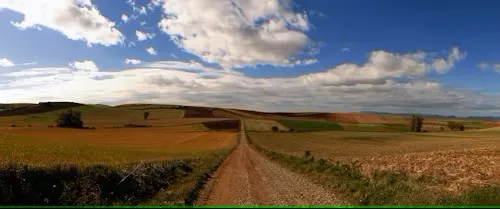
The Main Routes of the Camino de Santiago
The Camino Francés — the most walked route
The Camino Francés is by far the most popular route — approximately 60% of pilgrims walk it each year. It departs from Saint-Jean-Pied-de-Port, crosses the Pyrenees to Roncevaux (first stage: 25 km, 1,400 m of ascent), then traverses northern Spain over approximately 780 km: Pamplona, Logroño, Burgos, León, O Cebreiro, before reaching Santiago de Compostela.
The average duration is 30 to 35 days of walking at 20 to 25 km per day. It is the best waymarked and best-equipped route in terms of accommodation, and the most international — pilgrims from every corner of the world cross paths here. Its popularity also makes it the most crowded in July and August.
The Camino del Norte — the coastal route
The Camino del Norte follows the Cantabrian coast from Irún (the French-Spanish border, just a few kilometres from Biarritz) to Santiago, passing through San Sebastián, Bilbao, Santander and Oviedo.
Wilder and less crowded than the Francés, it offers spectacular coastal scenery but more demanding elevation. Average duration: 35 to 40 days. It is an excellent choice for those who want to avoid crowds while enjoying exceptional landscapes. Some walkers combine routes: Camino del Norte to Oviedo, then the Camino Primitivo (the oldest of all) to Santiago.
The Camino Portugués — from Lisbon or Porto
The Camino Portugués departs from Lisbon (620 km) or Porto (240 km) and heads north to Santiago through Portugal and north-western Spain. The Porto version is the most popular — it can be completed in 12 to 15 days and is now the second most-walked route after the Camino Francés.
Less physically demanding than the Francés (less elevation gain), it attracts many first-time pilgrims and those seeking a different experience, with landscapes of vineyards, granite and Portuguese Atlantic coastline. The coastal variant (Caminho da Costa) is particularly well regarded.
Other routes: Primitivo, Via de la Plata, Inglés
The Camino Primitivo, departing from Oviedo, is the oldest of all the routes — it predates the Camino Francés and was walked by the first Asturian kings in the 9th century. Demanding and mountainous, it attracts experienced walkers.
The Via de la Plata (Camino del Sur) departs from Seville and crosses Extremadura and Castile over more than 1,000 km — the longest Spanish route, remarkable for its solitude and grandeur. The Camino Inglés departs from Ferrol or La Coruña and was historically walked by English and Irish pilgrims who landed in Galician ports.
Preparing for the Camino de Santiago
The credential — the pilgrim passport
The credential (credencial in Spanish) is the official pilgrim passport. It is stamped at each stage — in hostels, churches, tourist offices, bars and participating businesses — and serves as proof that the Camino was genuinely walked.
It is essential for two reasons: accessing refugios (reduced-price pilgrim hostels) and obtaining the Compostela in Santiago — the official certificate awarded on arrival, provided at least the final 100 km have been walked on foot (or 200 km by bicycle) with a minimum of two stamps per day on that final stretch.
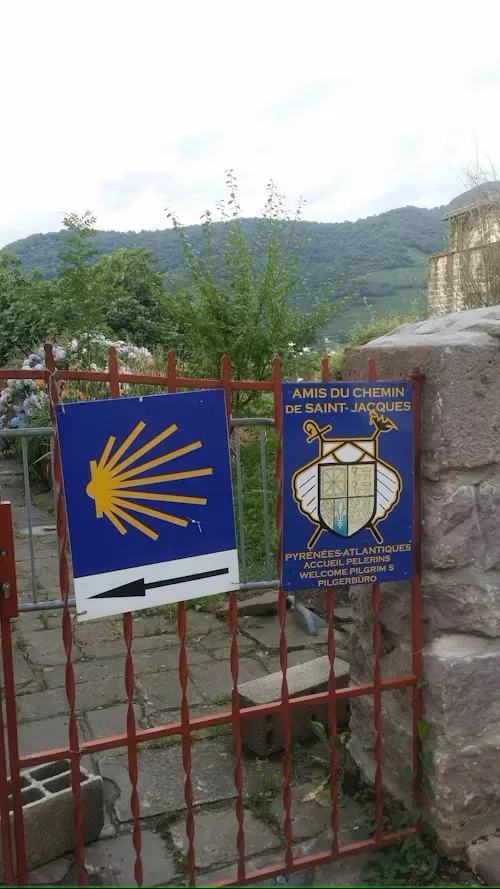
The credential can be obtained before departure from pilgrim associations (including Saint James associations in your home country) or directly from the Pilgrims’ Welcome Office in Saint-Jean-Pied-de-Port on the day of departure.
The backpack — the 10% rule
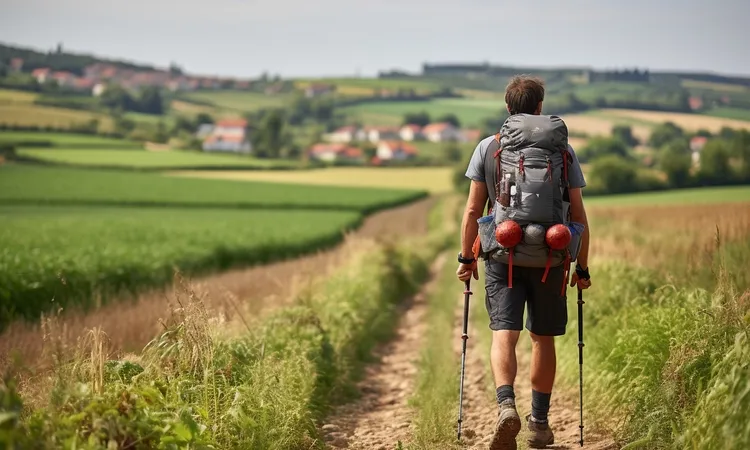
Backpack weight is the number one cause of abandonment and injury on the Camino. The universal rule among experienced pilgrims: the pack must not exceed 10% of body weight — that is 7 to 10 kg maximum for most walkers.
Essentials: well broken-in hiking boots (never new ones on day one), a small selection of technical moisture-wicking clothes, a waterproof rain cape, a basic first-aid kit, telescopic poles to protect the knees on descents, and at least 1.5 litres of water for stages without resupply points.
Anything that is not strictly necessary stays at home — or can be sent ahead to hostels via the baggage transfer services available on the Camino Francés.
Physical training before departure
The Camino Francés is not technically difficult — it requires no mountain skills. But covering 20 to 25 km per day for 30 days demands serious physical conditioning, particularly for the joints (knees, ankles) and feet.
Starting training 3 to 6 months before departure is strongly recommended: daily walks of 5 to 10 km to begin with, building up to 15 to 20 km hikes with a loaded pack on varied terrain. Boots must be fully broken in during training — never worn for the first time on the Camino itself.
Accommodation on the Camino Francés
The Camino Francés is exceptionally well equipped with accommodation. Refugios (or albergues) — public or association-run pilgrim hostels — offer dormitory beds between €8 and €18 per night, accessible to credential holders. B&Bs and hotels supplement the offer for those who prefer more privacy.
In high season (July-August), advance booking has become essential on the most popular stages. The first nights at Saint-Jean-Pied-de-Port and Roncevaux are often fully booked several weeks ahead.
Reaching Saint-Jean-Pied-de-Port by Taxi from Biarritz
For the vast majority of pilgrims arriving by plane at Biarritz Airport (BIQ) or spending a few days on the Basque coast before beginning the Camino, reaching Saint-Jean-Pied-de-Port by taxi from Biarritz is the simplest, most direct and most practical solution for the departure.
With a full backpack, walking poles and sometimes a second piece of luggage to send ahead, the logistics of departure are already complex enough without adding connections on public transport with restricted timetables. Smart Moov operates this transfer year-round from BIQ Airport, your hotel or Bayonne station — direct drop-off at the Pilgrims’ Welcome Office or your hostel, van available for groups.
FAQ — Camino de Santiago
How long is the Camino de Santiago?
The Camino Francés from Saint-Jean-Pied-de-Port measures approximately 780 km to Santiago de Compostela — 30 to 35 days of walking. Other routes are shorter: the Camino Portugués from Porto is approximately 240 km (12 to 15 days).
Do you need to be religious to walk the Camino de Santiago?
No. The Camino welcomes walkers of all beliefs — religious, agnostic, atheist — drawn by adventure, personal challenge or inner journey. In 2023, over 60% of pilgrims who received the Compostela declared non-religious or mixed motivations.
What is the best time of year to walk the Camino de Santiago?
April-June and September-October are the ideal periods — pleasant temperatures, hostels available, manageable crowds. July-August is high season with heavy foot traffic and essential advance booking. November to March is possible for experienced walkers, but some refugios close and mountain weather on the first Pyrenean stage can be severe.
What is the Compostela?
The Compostela is the official certificate issued by the cathedral of Santiago to pilgrims who have completed the Camino. To receive it, at least the final 100 km must have been walked on foot (or 200 km by bicycle) with a credential stamped at least twice per day on that final stretch. This document is distinct from the Distancia certificate, which is issued to any walker regardless of their motivation.
Can you walk the Camino de Santiago in stages over several years?
Yes — this is a very common approach, particularly for those who cannot take 30 consecutive days off. Many pilgrims walk the Camino Francés in 3 or 4 separate trips spread over several years, picking up each time where they left off. The credential retains all stamps regardless of the time elapsed between stages.
Find our guide Saint-Jean-Pied-de-Port and the Camino Francés · our article Saint-Jean → Roncevaux, the first stage · and our page transfer Biarritz.