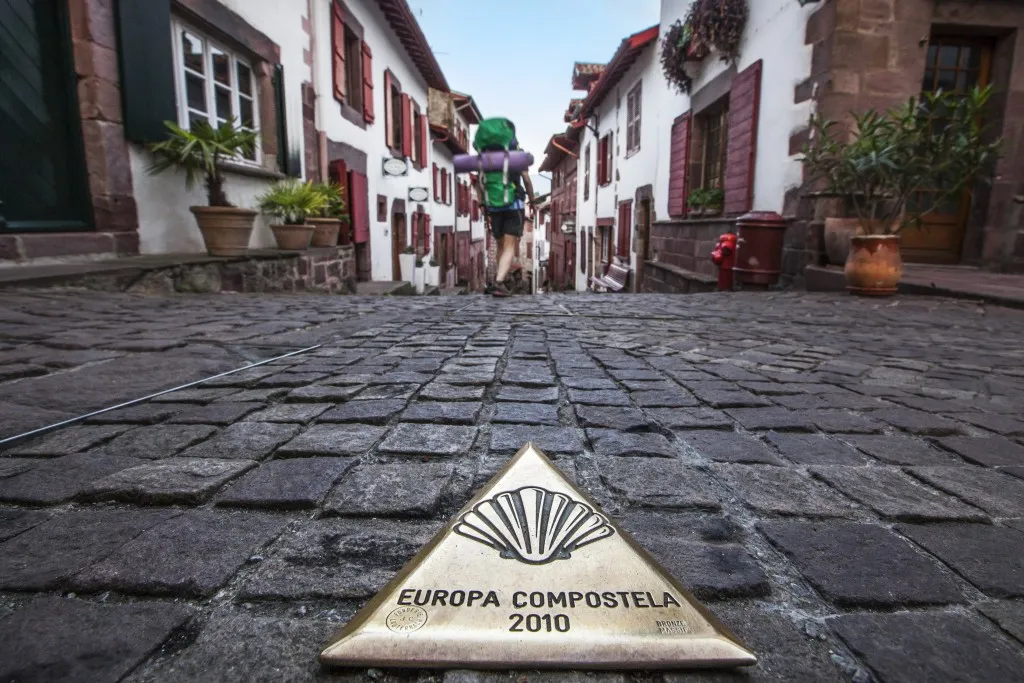
Saint-Jean-Pied-de-Port is the departure point of the Camino Francés, the most walked route of the Camino de Santiago
To arrive from Biarritz or BIQ Airport in the best possible conditions, Smart Moov provides your private taxi transfer — fixed fare, Camino gear welcome, available 24/7.
Saint-Jean-Pied-de-Port Camino Francés : Everything You Need to Know Before Setting Off
Every year, tens of thousands of pilgrims from around the world converge on this medieval Basque town to push open the gate on the Rue de la Citadelle, stamp their credential and cross the Pyrenees towards Roncevaux.
But before taking the first step on the Camino, there is everything you discover on arriving in Saint-Jean — the Pilgrims’ Welcome Office, the credential, the accommodation, the weather advice, the route choice. This practical guide prepares you for all of it, from your first hours in town to your departure the following morning.
Saint-Jean-Pied-de-Port Camino Francés — at a Glance
📍 Starting point: Saint-Jean-Pied-de-Port, Pyrénées-Atlantiques (64) — 150 km from Biarritz
🎒 First thing on arrival: go to the Pilgrims’ Welcome Office, 39 Rue de la Citadelle — credential stamp + weather info + route advice
🗺️ Two route options: Route Napoléon (25 km, +1,430 m) or Route de Valcarlos (24.5 km, +905 m) depending on weather conditions
⏰ Recommended departure time: between 6:30 and 8:00 am to arrive at Roncevaux before the hostel closes
🛏️ Accommodation: book well in advance in high season — fully booked weeks ahead in July-August
🚖 From Biarritz: Smart Moov transfers in 1h30-1h45, fixed fare from €150, van available for groups
Saint-Jean-Pied-de-Port: The Camino Francés Starting Town
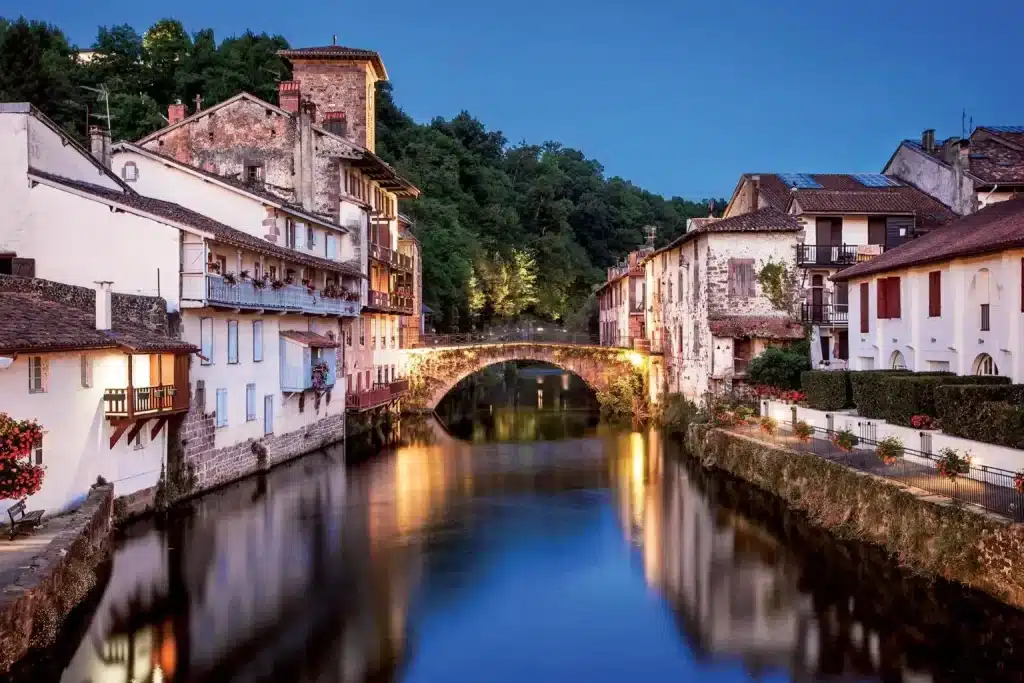
Nestled at the foot of the Pyrenees at the confluence of the Nive and its tributaries, Saint-Jean-Pied-de-Port (Donibane Garazi in Basque) is one of the most meaningful towns on the entire Camino de Santiago.
Since the Middle Ages, the four great French pilgrimage routes — from Tours, Vézelay, Le Puy-en-Velay and Arles — have converged here before crossing the Pyrenees together. The town is the final gathering point, the place where body and mind are prepared, where route information is collected and where pilgrims meet for the first time the strangers who will share a few weeks or a few days of walking with them.
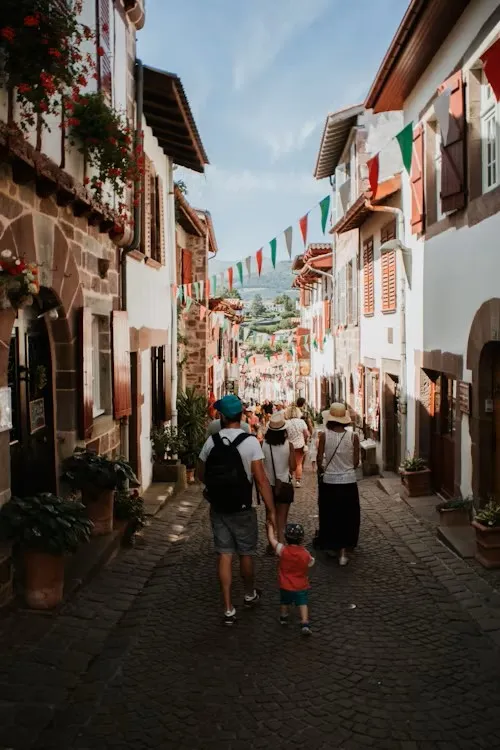
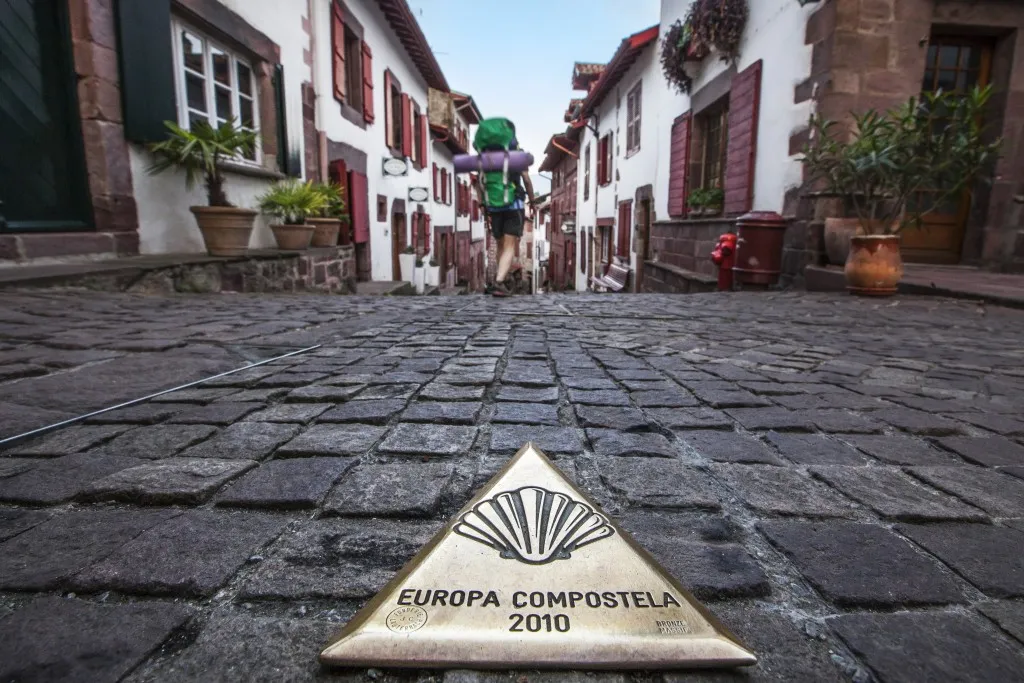
The old town, with its pink sandstone ramparts, red and green half-timbered houses and cobbled Rue de la Citadelle, forms an intact medieval setting that has barely changed in centuries. The Porte Saint-Jacques, set into the ramparts and inscribed as a UNESCO World Heritage Site since 1998, is the symbolic threshold every pilgrim crosses at the start of the Camino Francés.
The Pilgrims’ Welcome Office — First Stop on Arrival
Where is the Pilgrims’ Welcome Office?
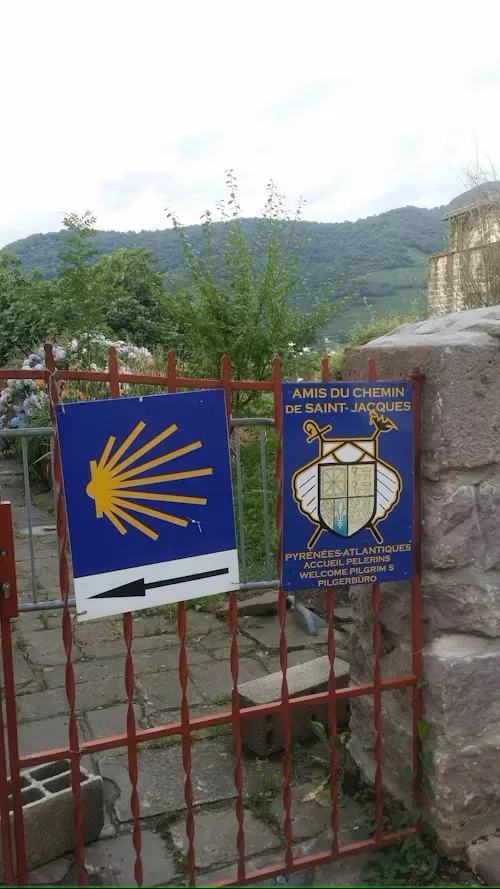
The Pilgrims’ Welcome Office, run by the association Côte Saint-Jacques, is located at 39 Rue de la Citadelle, 64220 Saint-Jean-Pied-de-Port.
It is the first stop for every pilgrim beginning the Camino Francés. Multilingual volunteers — often former pilgrims themselves — welcome arrivals every day, year-round (with reduced hours out of season).
Their role is essential: stamping the credential, providing information on weather conditions and trail status, advising whether the Route Napoléon is open or the Route de Valcarlos is recommended, directing pilgrims to available accommodation and answering all the practical questions of departure.
What happens at the Pilgrims’ Welcome Office?
At the Welcome Office, pilgrims obtain or have their credential stamped — the pilgrim passport, essential for accessing refugios and obtaining the Compostela in Santiago. They also receive a detailed map of the first stage with both route options, water points, intermediate hostels and mountain emergency numbers.
In high season (July-August), the Welcome Office can be very busy from 7am. It is advisable to go the evening before departure to collect information and get the credential stamped in peace.
The Credential — the Camino Francés Pilgrim Passport
What is the credential for?
The credential (credencial in Spanish) serves two essential purposes on the Camino Francés.
First: accessing refugios and albergues (pilgrim hostels) at reduced rates — these establishments are reserved for credential holders to preserve their communal spirit and prevent them being taken over by tourists with no connection to the pilgrimage.
Second: obtaining the Compostela in Santiago de Compostela — the official certificate of pilgrimage completion. This requires at least the final 100 km to have been walked on foot (or 200 km by bicycle) with a minimum of two stamps per day on that final stretch.
How and where to get your credential?
The credential can be obtained before departure from pilgrim associations in your home country (the Confraternity of Saint James in the UK, the American Pilgrims on the Camino in the US, and equivalent bodies in most countries). Most issue them free of charge or for a small contribution.
It can also be obtained directly from the Pilgrims’ Welcome Office in Saint-Jean-Pied-de-Port on the day of arrival or the evening before departure. This is the most common approach for pilgrims arriving from abroad who have not had the opportunity to obtain one in advance.
As soon as you have the credential, it must be stamped in Saint-Jean — at the Welcome Office, your hostel or one of the partner shops on the Rue de la Citadelle. This first stamp is often kept with particular emotion.
Accommodation in Saint-Jean-Pied-de-Port — Where to Sleep Before Departure
Pilgrim hostels (refugios)
Saint-Jean-Pied-de-Port has several pilgrim hostels for the night before departure. Refugios offer dormitory beds between €15 and €25 per night, accessible only to credential holders. Communal atmosphere, strict house rules (lights out at 10pm, leave by 8am), but a unique pre-departure atmosphere found nowhere else.
The best-known addresses — gîte Compostelle, Accueil Saint-Jacques, gîte Zuharpeta — are all on the Rue de la Citadelle or within a few minutes’ walk.
B&Bs and hotels
For more comfort and privacy, B&Bs (€40-80) and hotels (€60-150) offer a proper rest before the effort of the first stage. Several B&Bs also offer a table d’hôtes dinner in the evening — a chance to meet other pilgrims in a more intimate setting.
Book in advance — essential in high season
In July and August, Saint-Jean-Pied-de-Port is fully booked weeks in advance. The night before the Camino is one of the most sought-after — not booking is risking having to sleep in a neighbouring town and losing time and energy before even starting.
Outside high season (April-June, September-October), walk-in arrivals are generally possible — but a call ahead is still advisable for the most popular establishments.
Practical Tips for Your Departure
The evening before departure — what to do
The evening before is a stage in its own right. Visit the Pilgrims’ Welcome Office to collect the latest weather information and check the status of the Route Napoléon. Have your credential stamped if not yet done. Check your pack and make sure it does not exceed 10% of your body weight.
Eat early — restaurants on the Rue de la Citadelle generally close between 9pm and 10pm. Get to bed early too — the recommended departure is between 6:30 and 8:00 am to have time to cross the Pyrenees in daylight and reach Roncevaux before the hostel closes (around 9-10pm).
Route Napoléon or Route de Valcarlos?
This is the great question of the first morning. The Route Napoléon is the historic way — 25 km, 1,430 m of ascent, exceptional panoramas across both sides of the Pyrenees. It is closed in fog, snow or strong winds — the Pilgrims’ Welcome Office announces conditions each morning at opening.
The Route de Valcarlos (24.5 km, 905 m of ascent) follows the Nive d’Arnéguy river and is walkable in any weather, year-round. Less spectacular but safer in bad conditions — recommended in winter and during periods of poor weather. For full details on both options, see our article Saint-Jean-Pied-de-Port → Roncevaux, guide to the first stage.
Equipment checklist before leaving
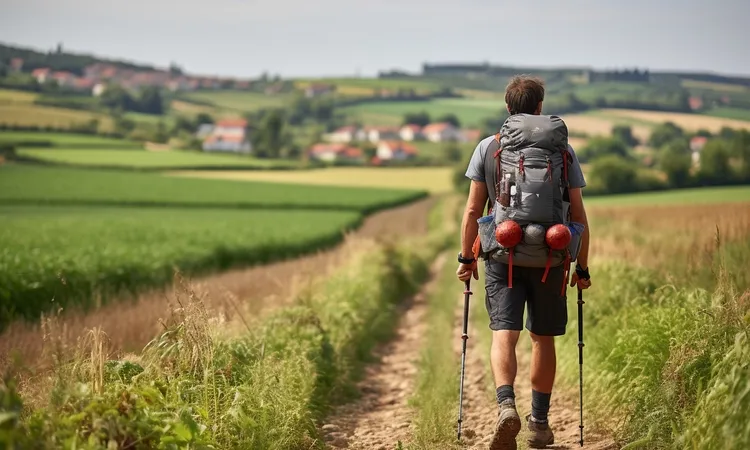
Well broken-in boots — this is non-negotiable. Most first-day blisters come from new or insufficiently broken-in footwear. A waterproof rain cape in the pack, even if the sky is clear at departure — weather changes fast on the Pyrenean ridges. At least 1.5 litres of water — there are no water points between Saint-Jean and the summit on the Route Napoléon. Trekking poles to protect the knees on the long final descent to Roncevaux.

Getting to Saint-Jean-Pied-de-Port from Biarritz
For most pilgrims arriving from Biarritz Airport or staying on the Basque coast before departure, the transfer to Saint-Jean-Pied-de-Port from Biarritz is the most direct and practical solution for the Camino departure.
Pick-up from BIQ Airport, your hotel in Biarritz or Bayonne station — direct drop-off at the Pilgrims’ Welcome Office or your hostel on the Rue de la Citadelle.
Fixed fare from €150, flight tracking for airport arrivals, van available for groups with full Camino kit. Smart Moov operates this route year-round, 24/7.
FAQ — Saint-Jean-Pied-de-Port Camino Francés
Do you need to book accommodation in Saint-Jean-Pied-de-Port in advance?
Yes, in high season (July-August) and at spring and autumn weekends. The town is often fully booked weeks in advance in summer — not booking risks having no bed in Saint-Jean the night before departure. Outside high season, booking a few days ahead is generally sufficient.
Can you get your credential directly in Saint-Jean-Pied-de-Port?
Yes. The Pilgrims’ Welcome Office at 39 Rue de la Citadelle issues credentials year-round (reduced hours out of season). It is advisable to go the evening before departure rather than on the morning itself to avoid the queues.
Can you start the Camino Francés at any time of year?
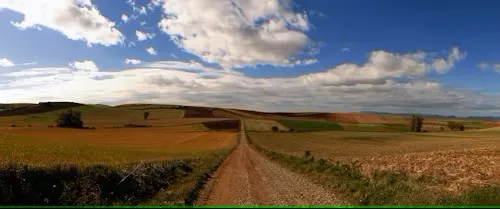
Yes, but with important precautions depending on the season. In winter (December-March), the Route Napoléon is regularly closed due to snow or fog — the Welcome Office redirects pilgrims to the Route de Valcarlos. In summer, the heat on the Meseta (Spanish central plateau) can be gruelling. April-June and September-October offer the best conditions for the vast majority of pilgrims.
What should you do in Saint-Jean-Pied-de-Port the evening before departure?
Visit the Pilgrims’ Welcome Office for the credential and weather information. Check your pack (maximum 10% of body weight). Find the route departure and the Porte Saint-Jacques. Eat early and go to bed early — recommended departure is between 6:30 and 8:00 am to cross the Pyrenees in daylight and reach Roncevaux before the hostel closes (around 9-10pm).
Can you store luggage in Saint-Jean-Pied-de-Port?
Yes. Some hostels and shops offer luggage storage. Specialist companies also transfer bags between Camino stages — the Pilgrims’ Welcome Office has an up-to-date list of these providers.
Find our article Saint-Jean-Pied-de-Port → Roncevaux, guide to the first stage · our guide Camino de Santiago · and our page transfer Biarritz.